The Zero Employee Company: Why APIs Are Better Than HR
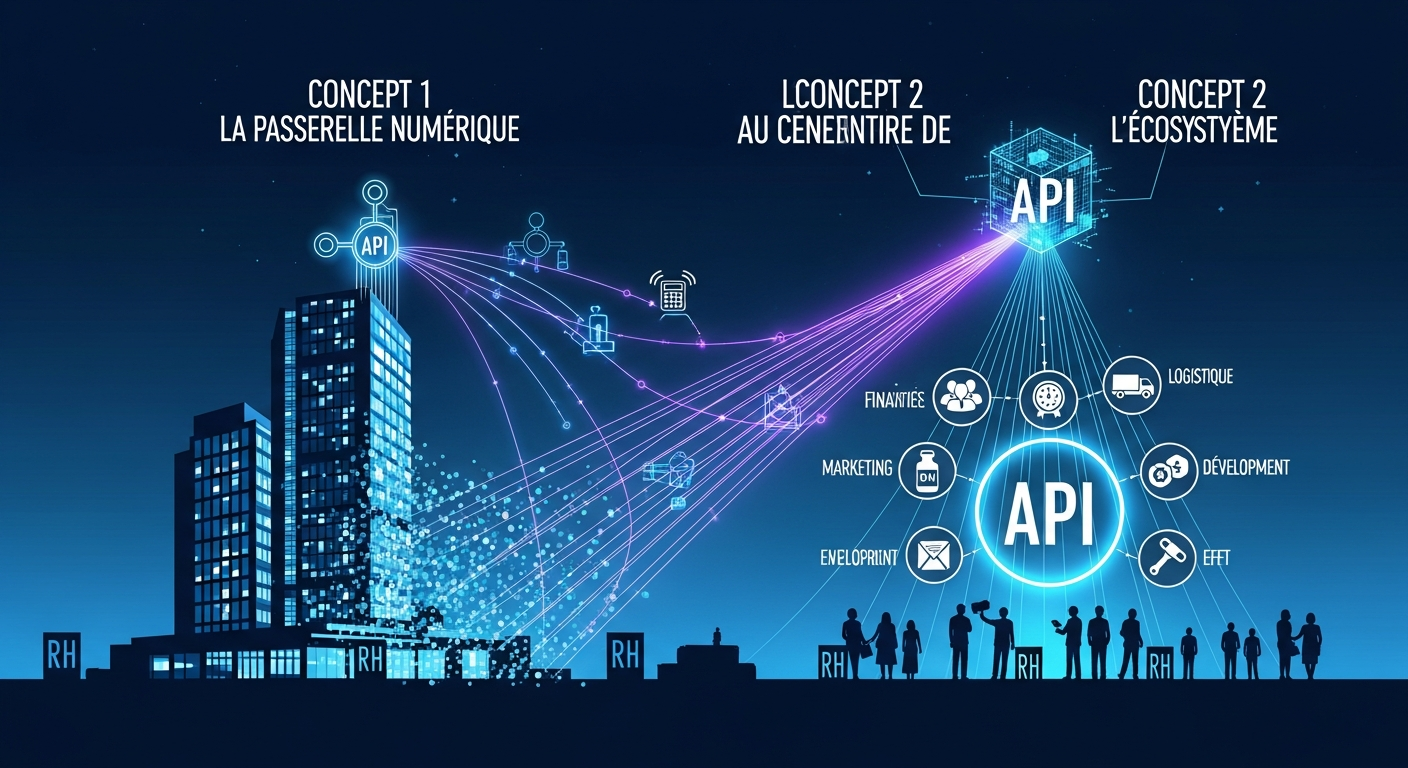
The old entrepreneur’s dream was to have 50 employees, glass offices with a city view, a top-of-the-line coffee machine, and a secretary who screens calls.
It was the symbol of success. Proof that you’d “made it.”
The reality behind this dream? A daily nightmare:
- Constant management of humans with their moods
- Exploding payroll taxes
- Interpersonal conflicts to arbitrate
- Turnover that destroys continuity
- Training to repeat endlessly
- Burnouts to manage (theirs… and yours)
The New Economy allows the emergence of a mythological creature: the Solo Unicorn.
A company generating hundreds of thousands — even millions — without any employees.
How? By replacing HR (Human Resources) with AR (Artificial Resources).
The Hidden Cost of Humans
Don’t get me wrong. Humans are wonderful.
For creativity. For empathy. For complex decisions. For strategic vision.
But for repetitive execution? Humans are an economic catastrophe.
Structural Problems with Employees
Biological fragility
- A human gets sick (average 8-12 days/year)
- A human has personal problems that affect work
- A human ages and slows down
- A human dies (morbid but real for planning)
Psychological variability
- A human has mood swings
- A human has “off” days
- A human loses motivation
- A human conflicts with colleagues
Time constraints
- A human sleeps 8h/day
- A human has weekends
- A human goes on vacation
- A human has legal working hours
The Real Cost For a minimum wage employee:
- Gross salary: ~$2,000
- Employer taxes: ~$800
- Office/equipment: ~$300
- Training/management: ~$200
- Total cost: ~$3,300/month
For a skilled employee:
- Double or triple those figures
And this cost is fixed, whether the employee is productive or not.
The Killer Calculation
A writer at $3,000/month produces (optimistically):
- 20 quality articles per month
- That’s $150 per article
An AEP produces:
- 20 quality articles per day if needed
- For a fixed monthly cost of a few hundred dollars
- That’s $1-5 per article
Productivity ratio: 30-150x
This isn’t a fair comparison. It’s an industrial revolution.
The Reliability of the AEP
In your AEP (Architectural Economic Platform), your “employees” are API connections and AI Agents.
What AI Agents Offer
Absolute availability
- 24 hours a day
- 7 days a week
- 365 days a year
- No coffee breaks, no vacations, no sick leave
Perfect consistency
- Same quality at 3am as at 2pm
- No “bad days”
- No Facebook distractions
- No personal drama
Instant scalability
- Need 10x production? One click.
- Need 100x? Two clicks.
- No recruiting, no training, no onboarding
Total obedience
- They follow the process (Blueprint) to the letter
- No unrequested creative interpretation
- No “I thought it was better this way”
- Instant modifications if you change the process
Predictable cost
- No salary negotiations
- No year-end bonuses
- No “I’m worth more than this”
- Fixed and predictable budget
The Architecture of a Zero Employee Company
How do you concretely structure a “Zero Employee” company?
The Strategic Layer (YOU)
This is the only irreplaceable human part.
Your responsibilities:
- Vision and direction
- Major strategic decisions
- Process validation
- Asset portfolio management
Time required: 5-10h/week maximum
The Orchestration Layer (AEP)
This is the operational brain.
Responsibilities:
- Agent coordination
- Data flows between systems
- Monitoring and alerts
- Continuous optimization
Tools: FlowContent, n8n, Make, or custom orchestrator
The Execution Layer (AI Agents)
This is the workforce.
Typical agents:
- Research Agent (market watch, trends)
- Writing Agent (content, emails)
- SEO Agent (optimization, internal linking)
- Social Agent (publishing, engagement)
- Analytics Agent (reports, insights)
- Support Agent (FAQ, level 1 tickets)
The Infrastructure Layer (APIs & SaaS)
This is the nervous system.
Connected services:
- Hosting (Vercel, Cloudflare)
- Database (Supabase, Airtable)
- Email (SendGrid, ConvertKit)
- Payment (Stripe, PayPal)
- Storage (S3, Cloudinary)
Exceptions: When Humans Are Still Necessary
“Zero Employee” company doesn’t mean “Zero Humans in the equation.”
When to Keep Humans
High-end client relationships If you sell $10,000 coaching, the client wants to talk to a human. That’s the product itself.
Complex strategic decisions AI can’t (yet) decide if you should pivot your business or acquire a competitor.
Pure artistic creation If your value is in human creative originality, you’re the artist, not the Architect.
Sensitive B2B negotiations Big contracts are signed human to human.
The Solution: On-Demand Contractors
Instead of employees, use on-demand contractors:
- Freelancers for occasional human tasks
- Agencies for specific projects
- Consultants for specialized expertise
Advantages:
- No fixed costs
- No daily management
- Total flexibility
- On-demand expertise
You keep humans for what matters. You rent them, you don’t buy them.
The Myth of the “Dream Team”
You’ve been sold the team dream.
“You can’t do everything alone.” “You need a team to scale.” “The best entrepreneurs surround themselves.”
That was true before AI.
The Team Reality
Most “teams” are:
- 1-2 people who actually produce
- 3-5 people who “coordinate” (meetings, emails, Slack)
- 2-3 people who cost more than they bring in
Studies show that productivity per person decreases with team size (Ringelmann effect).
The New Reality
With a well-configured AEP, a single individual can produce the output of a 10-20 person team.
Not because they work 10x more. Because they orchestrate 10x better.
The Architect alone with his agents beats the traditional team with its meetings.
Building Your Robot Army
How do you go from “I do everything myself” to “I orchestrate an army”?
Step 1: Inventory Your Tasks
List everything you do in a week. Categorize:
- Strategic (decisions, vision) → Keep
- Creative (pure ideation) → Keep (or augment with AI)
- Repetitive execution → Automate
- Routine communication → Automate
- Administration → Automate
Step 2: Document Processes
Before automating, document. For each repetitive task:
- Input (what triggers the task?)
- Process (what are the steps?)
- Output (what’s the expected result?)
- Quality criteria (how do you know it’s successful?)
Step 3: Automate Progressively
Don’t do everything at once. Start with the task that:
- Takes the most time
- Is the most repetitive
- Has the least variability
Automate. Test. Refine. Then move to the next one.
Step 4: Orchestrate
Once you have 5-10 individual automations, connect them. Create flows where one agent’s output becomes another’s input. That’s where the magic happens.
The Architect Leads a Robot Army
Here’s the truth nobody tells you:
The best entrepreneurs of the future won’t be people managers. They’ll be algorithm conductors.
They won’t spend their days in meetings. They’ll spend their days optimizing systems.
They won’t manage human conflicts. They’ll solve architecture problems.
It’s a fundamentally different skill. And it’s a fundamentally better life.
The Architect leads a robot army, not an adult daycare.
That’s the secret to his serenity… and his scalability.